
Amortisation Structure Hynetwork Crucial to Build National Hydrogen Ecosystem
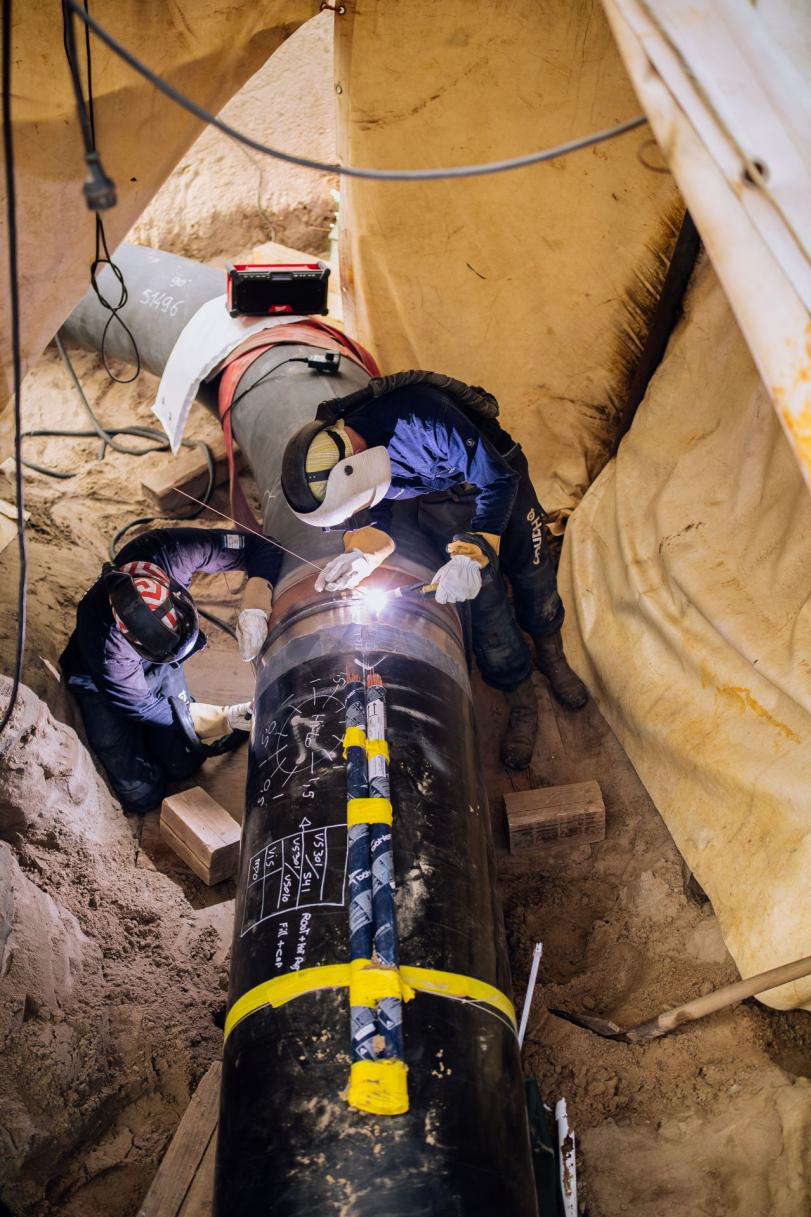
On the 23rd of September, the Dutch cabinet published its parliamentary letter outlining the progress in its hydrogen policy. The letter covers a wide range of important subjects for the realisation of the Dutch hydrogen sector, including demand-side obligations, import infrastructure and the development of hydrogen hubs. One of the key topics covers how the network costs related to the hydrogen backbone, Hynetwork, are handled. The opening of the first section of this pipeline network was celebrated earlier this year and its full and timely rollout is critical to link major industrial and port clusters throughout the Netherlands and to the neighbouring countries. By connecting supply and demand, Hynetwork is foundational for the hydrogen ecosystem.
Amortisation
The parliamentary letter outlines the role of Hynetwork as infrastructure that provides a route to end users for domestic producers and import facilities. By connecting major industrial and port clusters in the Netherlands and in neighbouring countries, a wider range of potential offtakers is accessible to suppliers. Certainty about the development of Hynetwork is therefore an important consideration for the investment willingness of companies. To safeguard an attractive investment climate, the Dutch government wishes to prevent elevated transport fees in the start-up years of the pipeline network, when the full system is commercially at its most vulnerable. Through an amortisation structure, costs can be spread out over time, creating a stable and predictable tariff evolution. At its core, tariffs will be lower in the earlier years and higher in the later years. The operator, Hynetwork, would have financial shortfalls in those earlier years, which would be earned back in the later years.
The cabinet commissioned TNO to assess the effects of intertemporal cost allocation. The research institute determined, based on three different scenarios, that in nearly all situations the repayment of the amortisation account is possible well within 30 years, confirming the aforementioned dynamic of covering earlier shortfalls with later revenues. Since there is a wide range in terms of the size of the amortisation account (varying between €170 million and €4.9 billion), the Dutch government will explore the deployment of a government guarantee, including the impact on state debt. A further update on this exercise is expected by the end of 2026.
H2A calls for a swift decision on the amortisation structure
H2A wholeheartedly agrees with the importance assigned to the further development of Hynetwork. Ensuring that the infrastructure is realised ahead of the market has been at the core of H2A’s position. By connecting the main industrial and port clusters in the Netherlands, like the North Sea Canal Area and Rotterdam, for example, a fully operational distribution system can be provided to the market. Government assurance that Hynetwork will be realised in line with the publicly released roll-out plan will provide a big boost to both the demand- and the supply-side. A clear and well-functioning amortisation structure is key. The prevention of elevated costs for first movers will significantly lower barriers to entry, kickstarts the first hydrogen flows and provides a foundation upon which the hydrogen sector can grow. H2A therefore calls upon the government and all parties involved to keep a high sense of urgency and provide clarity to the market. This way, Hynetwork can serve its intended purpose, as the backbone for the hydrogen economy.