
Hydrogen in a Changing World: Why the Context Has Shifted
Hydrogen has always sat at the intersection of decarbonisation, energy security, industrial competitiveness, and geopolitics. What has changed in recent years is not its role, but the weight given to these different dimensions. Where hydrogen was previously discussed primarily as a decarbonisation tool, global developments have brought its broader strategic relevance into sharper focus. Increasing geopolitical tensions, supply chain disruptions and energy market volatility have underscored the importance of building energy systems that are not only low carbon, but also resilient and diversified.
Recent events have reinforced this shift. The war in Ukraine exposed Europe’s structural dependence on imported fossil fuels. At the same time, disruptions in global supply chains and rising competition over critical materials have highlighted vulnerabilities in existing energy systems. These developments have not only intensified competition for energy resources but have also demonstrated the fragility of concentrated supply chains.
In this context, the development of clean energy supply chains, including hydrogen, has become increasingly important. Beyond their decarbonisation value, they offer the potential to reduce structural dependencies and create a more shock-resistant energy system. Unlike fossil fuels, hydrogen can be produced in a wide range of geographies, enabling diversification of supply sources over time.
A New Geopolitical Reality
Energy has always been central to economic development and geopolitical dynamics. What has changed is the growing recognition that hydrogen can play a role in shaping a more resilient and diversified energy system. This has placed greater emphasis on the diversification of energy sources and supply routes. For Europe, this means balancing domestic production ambitions with the development of international import corridors and strategic partnerships.
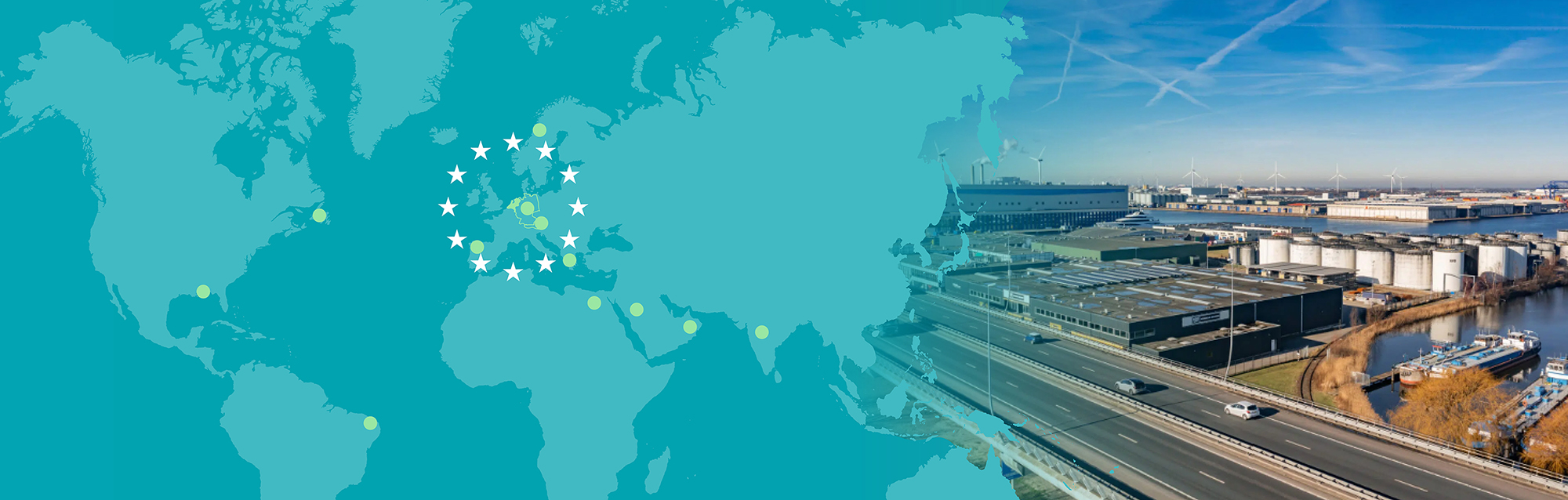
For ports and industrial clusters such as the port of Amsterdam, this translates into positioning as a gateway within an interconnected hydrogen economy. Within the H2A ecosystem, this approach is already taking shape.
Corridor development discussions linking Amsterdam to production regions such as Oman and Canada, including cooperation with partners such as EcoLog and North Atlantic, illustrate how supply diversification is being actively explored. At the same time, collaboration with European partners is equally critical.
Connections such as the Bilbao–Amsterdam corridor, alongside partnerships with countries such as Norway, demonstrate how a more integrated intra-European energy system can emerge. Rather than competing, regions with favourable production conditions can supply hydrogen to industrial clusters in Northwestern Europe where demand is concentrated. This strengthens both system efficiency and industrial competitiveness, while enabling access to lower-cost renewable energy.
From Climate Policy to Industrial Strategy
The global hydrogen landscape is increasingly shaped by industrial strategy. Governments are using policy instruments, subsidies, and regulatory frameworks to position themselves within future energy value chains.
At the same time, recent developments have demonstrated how quickly policy environments can shift. This reinforces the importance of diversification, not only in energy supply, but also in investment exposure. Long-term infrastructure investments require a stable and predictable framework, yet the reality is that regulatory conditions can evolve rapidly.
Europe operates within a complex regulatory environment, supported by instruments such as the Hydrogen Bank, IPCEIs and national subsidy schemes. However, projects often face longer permitting timelines and higher energy costs compared to other regions. This creates critical tension. The challenge is not that industries are actively seeking to adopt hydrogen, but rather that they face increasing pressure to decarbonise within Europe’s regulatory framework. If this transition results in significantly higher costs compared to other regions, industries may consider relocating to jurisdictions with less stringent requirements.
Hydrogen therefore plays a dual role. It is not only a decarbonisation pathway, but also a potential tool to anchor industry within Europe, provided it can be deployed in a way that maintains competitiveness. This shifts the central question. It is no longer only:
How does hydrogen reduce emissions? But increasingly: How can hydrogen support industrial resilience, protect value chains and sustain Europe’s competitive position?
Energy Security and System Resilience
Hydrogen must also be understood as part of a broader effort to strengthen system resilience. Across Europe, electricity grids face congestion challenges, while renewable energy generation is subject to seasonal variability. Hydrogen and its derivatives provide complementary flexibility, enabling energy to be stored, transported and utilised across regions and timeframes.
Hydrogen infrastructure, including import terminals, storage facilities, conversion assets and pipeline networks, therefore represents more than climate infrastructure. It forms part of a more diversified and robust energy system.
Within the port of Amsterdam and the broader H2A ecosystem, this is already reflected in ongoing developments. Projects such as the regional hydrogen network being developed by Firan, alongside the national hydrogen backbone led by Hynetwork Services, demonstrate how infrastructure can connect import terminals with industrial demand clusters.
Similarly, terminal, storage and conversion projects within the Amsterdam region contribute to building a system that is less dependent on single energy sources and better able to absorb external shocks, whether geopolitical, economic or technological.
A Broader Strategic Conversation
The hydrogen discussion has evolved beyond a purely sustainability-driven narrative. It now encompasses strategic autonomy, energy sovereignty, industrial policy and economic resilience.
This does not diminish hydrogen’s role in decarbonisation. Rather, it reinforces its relevance within a broader strategic context.
Within H2A, collaboration across producers, infrastructure developers, industrial users and financiers reflects this reality. The development of hydrogen corridors requires alignment across regions and sectors. Infrastructure investments depend on clear policy frameworks and credible long-term demand signals. At the same time, these developments highlight the need for a more grounded and realistic narrative. While hydrogen offers significant potential, its deployment at scale remains complex and requires continued coordination, investment and policy support.
Looking Ahead
The coming years will be decisive in determining whether Europe can translate ambition into implementation. Projects must navigate regulatory complexity, financing constraints and evolving market dynamics, while competing within an increasingly globalised energy landscape. At the same time, the opportunity remains substantial.
If hydrogen is developed with a clear focus on both decarbonisation and competitiveness, it can contribute to a more resilient, diversified and secure European energy system. In a changing world, hydrogen’s role has not fundamentally changed, the context in which it is being developed has. And it is this context that will shape how, where and at what pace hydrogen becomes part of Europe’s energy future.
A Role for Collaboration: The H2A Perspective
In this evolving landscape, the ability to translate strategy into implementation will depend on effective coordination across the hydrogen value chain.
The H2A Association was established to support this objective: bringing together producers, infrastructure developers, industrial off-takers, financial institutions and public stakeholders to accelerate the development of hydrogen supply chains connected to the port of Amsterdam and the wider European market. By providing a platform for dialogue, alignment and project coordination, H2A contributes to bridging the gap between ambition and execution.
As hydrogen moves from concept to infrastructure, the need for integrated ecosystems will only increase. This requires not only investment, but also alignment across projects, geographies, and stakeholders. H2A therefore continues to engage with partners across Europe and internationally to strengthen hydrogen corridors, support investment readiness and facilitate knowledge exchange across the value chain. Stakeholders interested in contributing to this evolving ecosystem are invited to engage with the H2A network as Europe works to build a more resilient hydrogen economy.